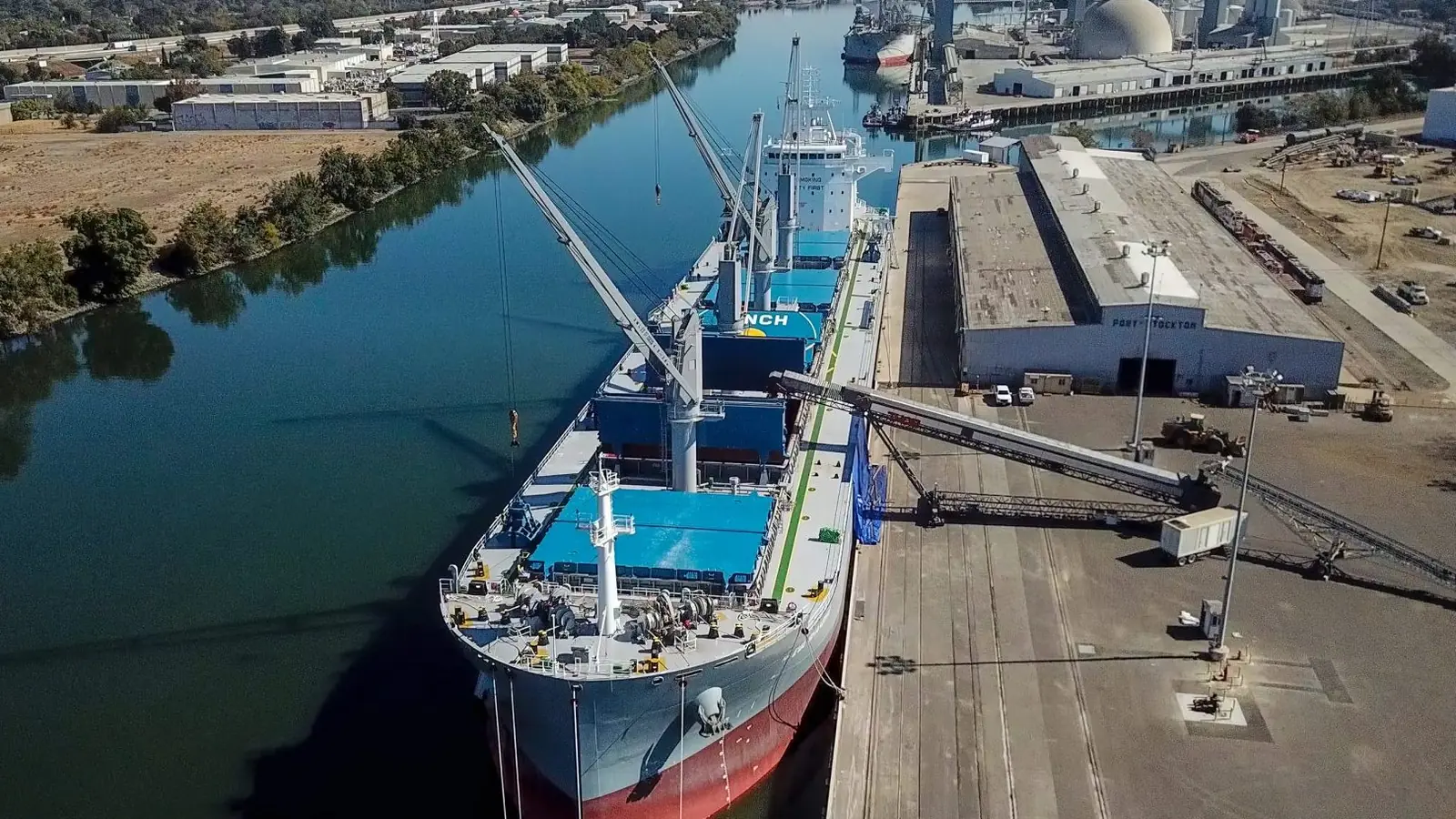
A bulk carrier loading at a river port with its conveyor boom swung over the hold
Container cranes and ships at a port terminal at dusk

Grants, loans and credits

Where the money actually is

There is no federal grant to open a mine. There is real money for processing, recycling and equipment, and a loan guarantee that covers mining outright. Here is what is open, what closed, and what does not exist at all.

Bulk carrier loading at a river port

Container terminal at dusk

Checked 28 September 2026

Deadlines pass and portals move. Everything below was verified against the agency’s own site on that date, not against a press release. Confirm the status yourself before you rely on it, and tell us if you find something stale.

Start with what does not exist

This is the part that saves the most time. Advocacy for domestic mining tends to imply that federal money is waiting to be claimed. For a great deal of what a mining business actually needs, it is not.

  • There is no federal grant to open a mine. No agency runs a programme that gives a company money to acquire claims, permit and build. The federal minerals programmes fund processing, refining, recycling, byproduct recovery and technology demonstration — not mine development.
  • There is no federal grant for private mineral exploration. Earth MRI funds pre-competitive government data collection through state geological surveys. It will not pay for your drill programme. The gap is well known and argued about; it is still a gap.
  • There is no small-business grant for buying equipment. The routes to equipment are guaranteed debt, strategic-capital lending, or state sales-tax abatement.
  • Abandoned mine land money is not open to private companies. Only states and tribes receive it, and only in six Appalachian coal states — Kentucky, Pennsylvania, West Virginia, Alabama, Ohio and Virginia — plus three tribal nations. You reach it as a contractor to a funded project, not as an applicant.
  • The strategic minerals reserve is not a programme. It is one financing transaction with one borrower. If your plan is to sell into it, the route is a commercial conversation, not an application.
  • Federal minerals grants carry real cost share. Around 20% at the low end, and the largest 2026 round required a minimum of 50%. If you cannot bring your share, a grant is not your instrument — debt is.

The short version

The 2026 federal grant cycle is over. Roughly $900 million ran across four competitions between November 2025 and July 2026, and every one has closed. Awards went out over the summer.

What is open today is financing — loans, guarantees and tax credits — plus one rolling intake form. That is a less exciting answer than a list of grants, and it is the true one.

Open or rolling right now

Eleven routes, ranked by how usable they are

SBA International Trade Loan — 90% guarantee

Open, rolling

Small Business Administration, through an approved lender

Who
Small businesses in more than two dozen energy-supply-chain trade codes. The list explicitly names metal ore mining — iron, gold, silver, copper, nickel, lead, zinc and uranium — plus coal, stone quarrying, sand and gravel, and drilling support activities.
Size
Up to $5 million per trade loan; $10 million cumulative with a 504
Funds
Working capital, equipment, facilities, refinancing

Announced 14 August 2026, extending the trade loan’s 90% guarantee — against the 75% standard on an ordinary 7(a) — to these energy and minerals trade codes for the first time. This is the most realistic capital source on this page for a driller, assayer, contractor or equipment supplier. No competition, no cost share, no federal registration — you need a lender, not a grant writer. One real hurdle: the trade loan still needs a trade nexus. Your lender has to document either that the loan expands exports or that your business is adversely affected by import competition. For most domestic minerals producers it is the import-competition route that applies — but it is a finding the lender must make, not an automatic qualification.

Find an SBA lender

Common screening application (EICMM)

Open, rolling

Energy Department, on behalf of fourteen agencies

Who
Any organisation with a critical minerals or energy infrastructure project. Genuinely open to small companies.
Size
Nothing directly
Funds
Routing only — it tells the agencies you pick that your project exists

Launched in July 2026. One form reaches Energy, Commerce, Interior, State, Treasury, Agriculture, Transportation, the SBA, the Department of War, EPA, HHS, the DFC, USTDA and EXIM. It is free and takes under an hour. Be clear what it is: a lead form, not an application for money. Submitting it obliges no agency to respond.

Start the screening form

Defense Industrial Base Consortium membership

Open, rolling

Department of War, run through the consortium

Who
Companies of any size. The consortium states that it keeps barriers low for small and non-traditional businesses.
Size
Project-scale; the consortium sets the range in each solicitation
Funds
Separation and processing, metal production and refining, alloying, recycling, supporting infrastructure

Membership is the prerequisite for responding to a solicitation, and the critical-minerals ones run on roughly four-week fuses — the most recent closed on 17 September 2026. Join before the next one drops, not after. There is also an unsolicited-proposal route when nothing is live. Note for investors reading company announcements: being accepted into the consortium is not an award, it only means the company may now respond.

Apply for membership

Energy Dominance Financing

Open, rolling

Energy Department — the former Loan Programs Office

Who
Large capital projects. The diligence burden alone rules out small firms.
Size
$100 million and up, into the billions
Funds
Processing, refining, recycling, recovery and reuse of critical minerals; retooling existing industrial plant

Four authorities apply to minerals, including the advanced-vehicle manufacturing programme and the innovative supply chain title. The department interprets them broadly to cover production, manufacture, recycling, processing, recovery and reuse. Expect twelve to twenty-four months from consultation to closing.

Request a free pre-application consultation

Office of Strategic Capital — equipment finance

Open, rolling

Department of War

Who
Mid-sized manufacturers and processors
Size
Direct loans up to $150 million
Funds
Equipment and manufacturing facilities on US soil

A better fit than the headline defence funds for a mid-sized processing or equipment business. The office has made conditional commitments to Phoenix Tailings and Energy Fuels, and an executed $150 million loan to MP Materials. Note the exclusions: pre-revenue companies, and projects that depend on federal funding to repay, are not eligible.

See the credit programme

EXIM Bank — three routes

Open, rolling

Export-Import Bank of the United States

Who
Make More in America is for domestic manufacturing and needs only a modest export nexus, lower for a small business. The critical minerals programme under the China and Transformational Exports Program offers longer tenors and lower fees.
Size
Scales with jobs supported and with the share of output contracted to US buyers
Funds
Domestic manufacturing plant; overseas mines with signed US offtake

The Letter of Interest is non-binding — it commits EXIM to nothing — and carries a $1,000 application fee. It is still the cheapest way to find out whether EXIM is interested before you spend real money, but budget for it.

Start with a Letter of Interest

Nevada Bond Pool

Open, rolling

Nevada Division of Minerals

Who
Small Nevada operators — the programme exists specifically to reduce the burden of obtaining a reclamation bond.
Size
Up to $3 million per participant
Funds
Reclamation bonding, not cash

Notice-level: full deposit, 2% a year. Plan-level: 50–80% deposit, 5–10% a year, paid quarterly in advance. It is not free money — it is access to bonding a small operator might not otherwise get. The most concretely useful state programme we found.

See the programme

Small Business Innovation Research — National Science Foundation

Next deadline 4 November 2026

National Science Foundation

Who
US small businesses of 500 employees or fewer
Size
Up to $305,000 for six to eighteen months
Funds
Deep-technology research and development

There is no mining topic, because the Foundation deliberately does not name technologies — you pitch your own. Sensing, autonomy, separation chemistry, assay instrumentation and recycling all sit well here. A project pitch is mandatory first and you must be invited before you can submit, so the real deadline is earlier than the one printed. Energy and Defense run their own programmes on separate cycles; check their portals for current dates.

Read the solicitation

ASPECT

Concept papers 9 October 2026

Energy Department

Who
Industry-led teams, unrestricted
Size
$58 million available in total
Funds
Scaling up and pre-piloting chemical technologies that use alternative and waste feedstocks

The 9 October concept paper is mandatory — you cannot submit a full application without one, so the real deadline is eleven days away, not December. Stage 1 full applications follow on 1 December 2026; selections are expected in April 2027. Minerals-adjacent rather than minerals: a hydrometallurgical or waste-stream recovery process may fit, a mine will not. Read the topic areas before spending effort on it.

Read the funding notice

PROSPECT planning prize

Closes 5 October 2026

Energy Department

Who
US academic institutions with mining and minerals degree programmes
Size
Up to $1 million per winner, from a $16 million pool
Funds
Workforce — plans to expand training, upskilling and hands-on learning

Not for companies, and the department runs its prizes on the HeroX platform rather than a .gov address. The eligible field is wider than universities — community colleges and high schools with relevant credentials count too, which makes partnering with a local applicant a real route to funded apprenticeships for a mining-services firm.

See the prize

National Security Fund Finance Program

Proposals 1 November 2026

Office of Strategic Capital, Department of War

Who
Credit fund managers only. An operating company cannot apply.
Size
$500 million to $1 billion per fund
Funds
First- and second-lien lending into critical minerals companies

Complete proposals are due by 5pm Eastern on 1 November 2026. Listed here so nobody wastes a week on it. A driller or assayer cannot apply. It matters only because the funds created through it will be lending into this sector from 2027, which is a door that opens later.

See the programme
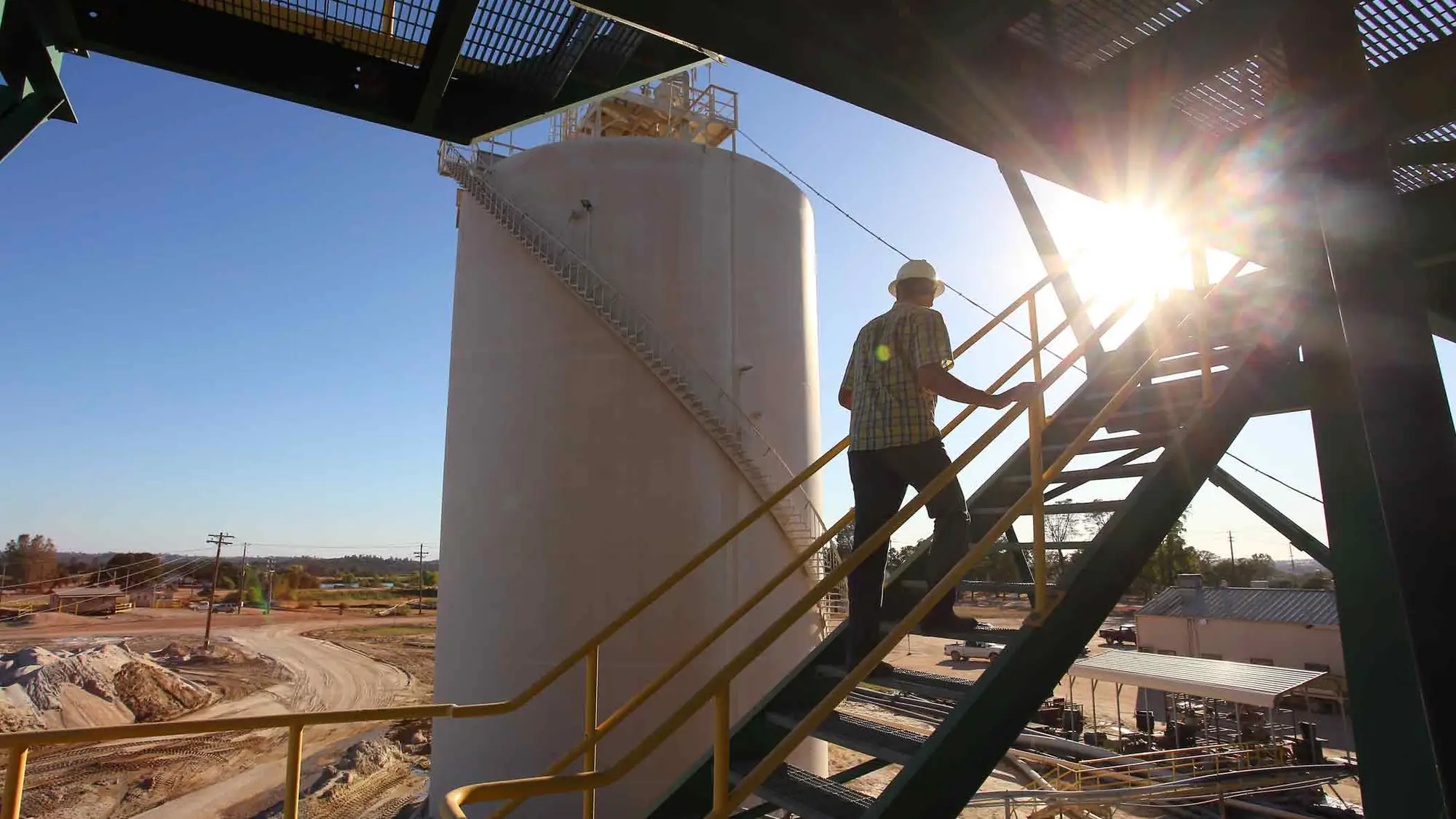
A worker climbing an external stair at a processing plant, sun flaring behind the structure

The money follows the furnace, not the pit.

Every federal minerals programme funds processing

Closed, and what they paid for

The 2026 rounds, and whether they are expected back

Worth reading even though you cannot apply. It shows what the government is actually willing to fund, who it funded, and roughly what a winning project looks like — which is the best guide available to what the next round will want.

Federal minerals funding rounds that closed in 2026
ProgrammeClosedOutcomeComing back?
Battery materials processing and recyclingEnergy Department24 Apr 2026$500M awarded 20 Aug 2026 to seven projectsThe department called it the third round of the programme. Notices of intent for a follow-on sit on the portal with dates still to be set.
Mines and metals capacity expansion — byproduct recoveryEnergy Department15 Jan 2026$162M awarded 18 Aug 2026 to nine projectsRecipients included Alcoa, Thompson Creek Metals, Felix Gold Alaska, DISA Technologies and Trigg Minerals. An open-ended notice of intent remains posted.
Mine of the Future — proving groundEnergy DepartmentJanuary 2026$73M awarded 9 Sept 2026Went to Innovative Wireless Technologies, the University of Arizona, the University of Missouri and Southern Methodist University. Notice of intent still open-ended.
Rare earth elements demonstration facilityEnergy DepartmentJanuary 2026$134M announced 2 Jun 2026Two projects — the Colorado School of Mines and Phoenix Tailings. Notice of intent still open-ended.
Critical minerals and materials acceleratorEnergy Department23 Jul 2026$69M across multiple topic areasAwards expected between September and December 2026. No follow-on announced.
Critical material innovation, efficiency and alternativesEnergy DepartmentRan on rolling areas of interest$150M across multiple selection roundsThe structure allows new areas of interest to be added, so this one can reopen without a fresh competition. Confirm the current position with the department.
Domestic processing of critical mineralsDefense Industrial Base Consortium17 Sept 2026Awards pendingThe second such solicitation in 2026; the first closed in March. Membership is required to respond, which is why joining now matters.
Earth MRI mine waste cooperative agreementsUS Geological Survey4 Jun 2026$5M across 14 awards, $3,000 to $356,000State geological surveys only. Runs annually; expect the next round around March 2027.

The two Energy Department portals to watch are netl-exchange and eere-exchange, now branded CMEI eXCHANGE. Both are being consolidated in October 2026 and are expected offline from the evening of Friday 2 October to Sunday 4 October; accounts transfer automatically, but the new address has not been published, so check back after that weekend. Watch the notices of intent as well as the funding notices — a notice of intent is the earliest warning you get, usually weeks before the competition opens.

The tax credit, and who actually gets it

Section 45X, the advanced manufacturing production credit, pays 10% of production costs for an applicable critical mineral. It is claimed on IRS Form 7207, one form per facility, with critical mineral production costs computed in Part IV and carried to Part II. It is uncapped, which makes it the most scalable operating subsidy in current law.

The catch is who claims it. The credit goes to whoever produces a qualifying mineral to its purity specification and sells it to an unrelated person. If you mine ore and ship concentrate, you are probably not the claimant — your refiner is. Mining alone does not create an eligible component, and the processing or refining has to happen in the United States. Have this modelled by a tax adviser before it goes anywhere near a business plan.

It no longer lasts. The 2025 reconciliation act converted it from permanent to a phase-out: full value through 2030, then 75% in 2031, 50% in 2032, 25% in 2033, and nothing after that. Metallurgical coal was added at a lower rate of 2.5% and only for coal produced through the end of 2029.

Eligibility still tracks the February 2022 critical minerals list of fifty, so copper, silver, lead, potash, silicon and rhenium — all added to the national list in November 2025 — are not 45X-eligible. Bills to fix that are pending and not enacted.

CRS IF12809 · IRS Form 7207 instructions

Which financing is realistic for a small business

Federal financing routes and whether a small business can realistically use them
SBA International Trade Loan, 90% guarantee$5M per loanYes
SBA 7(a) and 504$10M cumulativeYes
EXIM — Make More in America, or the minerals programmeVariesYes, with an export nexus
Office of Strategic Capital equipment financeUp to $150MMid-sized only
Energy Dominance Financing$100M and upNo — large projects only
National Security Fund Finance Program$500M–$1bnNo — fund managers only

State money works differently

There is no state application portal for most of this. State incentives are negotiated deal by deal, triggered by jobs and capital investment, and offered as an inducement to site the project there. Which means the sequence matters more than the paperwork: you call the state economic development agency before you choose a site. Announce first and your leverage is gone.

Nevada has no dedicated critical-minerals fund. What it has are standard abatements that a processing or manufacturing operation can qualify for, and the rural thresholds are the ones that matter here — $1 million of capital investment and ten full-time employees in a rural county, against $5 million and fifty in an urban one. Sales and use tax can drop to 2% for two years on equipment, the modified business tax by half for four years, and personal property tax by half over ten. There is also a recycling abatement worth up to half the real property tax for ten years if the business recycles at least 50% of its raw materials on site, which is directly relevant to tailings reprocessing and scrap recovery.

The threshold that disqualifies people is the wage, not the capital. Average hourly wages must reach 100% of the statewide average, and a company has to satisfy two of the state’s three criteria, not just one. A ten-person rural operation paying below the state average will not qualify however much it spends on plant.

Nevada GOED incentives · Industrial development revenue bonds

What states have actually paid

  • Texas — $66.3 million to MP Materials for the Northlake campus across two state funds, inside a package of roughly $200 million in state, county and city support.
  • Tennessee — a $45 million FastTrack grant to Korea Zinc, plus a twenty-year payment-in-lieu-of-tax agreement.
  • North Carolina — up to $17.6 million in job development investment, plus up to $5.86 million from the utility account, to Vulcan Elements.
  • Louisiana — infrastructure grants of $900,000, $3 million and $6 million to three separate minerals projects, plus the industrial tax exemption and state-funded workforce training.
  • Wyoming — $6.1 million in energy matching funds to Ramaco Resources for the Brook Mine pilot, awarded in March 2025.
  • South Carolina — $13 million from the rural infrastructure fund and $2 million from LocateSC, plus readySC training.
  • Oklahoma — no dedicated minerals fund, but the Quality Jobs programme rebates up to 5% of new payroll for ten years. The gate is $2.5 million of new annual payroll within three years, plus a wage threshold and health insurance. Apply before you hire.

Before you can apply to anything federal

All of it is free

  1. Name an e-business point of contact for your organisation.
  2. Register at SAM.gov. This issues your unique entity identifier automatically. Allow ten business days, and longer if anything cannot be verified.
  3. Create a Login.gov account — you need it to reach SAM.gov.
  4. Create a Grants.gov account using the same email address as the SAM.gov point of contact.
  5. Add an organisation profile using your identifier, and assign roles.
  6. Renew SAM.gov every year. A lapsed registration silently blocks submission, usually discovered on a deadline.

Separate accounts are needed for some routes: the Energy Department’s eXCHANGE portals take its funding applications rather than Grants.gov, Defense small-business research runs through its own submission site, and the National Science Foundation requires an invited project pitch before a proposal. The consortium needs membership. SBA loans need none of it — only a lender. Grants.gov registration guide

How to spot a grant scam

The minerals boom has drawn exactly the grant-mill activity you would expect. The rules are simple and absolute.

  • The government never charges a fee to apply for or receive a grant. Any processing fee, release fee, registration fee or administrative fee is a scam. There are no exceptions to this.
  • SAM.gov registration and your identifier are free. Paid “registration services” are the most common rip-off aimed at first-time applicants — hundreds of dollars to fill in a free form, and some never file it.
  • Agencies do not cold-contact you about grants. Not by phone, text, direct message or unsolicited email. There is no “Federal Grants Administration.”
  • Check the domain. Federal programmes live on .gov. A grants site on .com or .org claiming to be the government is not.
  • Never pay by gift card, wire transfer or cryptocurrency. That is always a scam.
  • Real grant consultants exist and charge fee-for-service to write proposals. The red flags are guaranteeing an award, charging a percentage of money you have not received, claiming insider access, or claiming to know of grants that are not published.

Report it to the FBI at ic3.gov, or to the Federal Trade Commission on 1-877-FTC-HELP. The FTC’s online reporting form has been intermittently unavailable, so the phone line is the surer route. Its own guidance on this is at consumer.ftc.gov.

What to actually do this week

  1. Register on SAM.gov and get your identifier. Free, about ten business days, and nothing else federal works until it is done.
  2. Submit the common screening form. Free, rolling, reaches fourteen agencies at once.
  3. Join the Defense Industrial Base Consortium now, before the next minerals solicitation drops on a four-week fuse.
  4. Call an SBA lender about the 90% trade loan guarantee. Mining trade codes have been explicitly covered since 14 August 2026 — ask them straight away how they would document the trade nexus for your business.
  5. In Nevada and small? Apply to the bond pool.
  6. Have a real capital project? Request the free pre-application consultation from Energy Dominance Financing.
  7. Set a watch on both Energy Department portals, including the notices of intent.

Nothing on this page is legal, tax or financial advice, and eligibility for every programme here is decided by the agency, not by us. If a listing is wrong or out of date, send the correction with a source and it gets fixed. listings@mineamericagreatagain.com