
Claims and mineral ground
Ground looking for someone to work it
Claim holders, landowners and estates with mineral property they are not going to develop — listed free, checked against the federal record before publication, and connected directly to the people who might develop it. No commission, no brokerage, no position in anything listed.
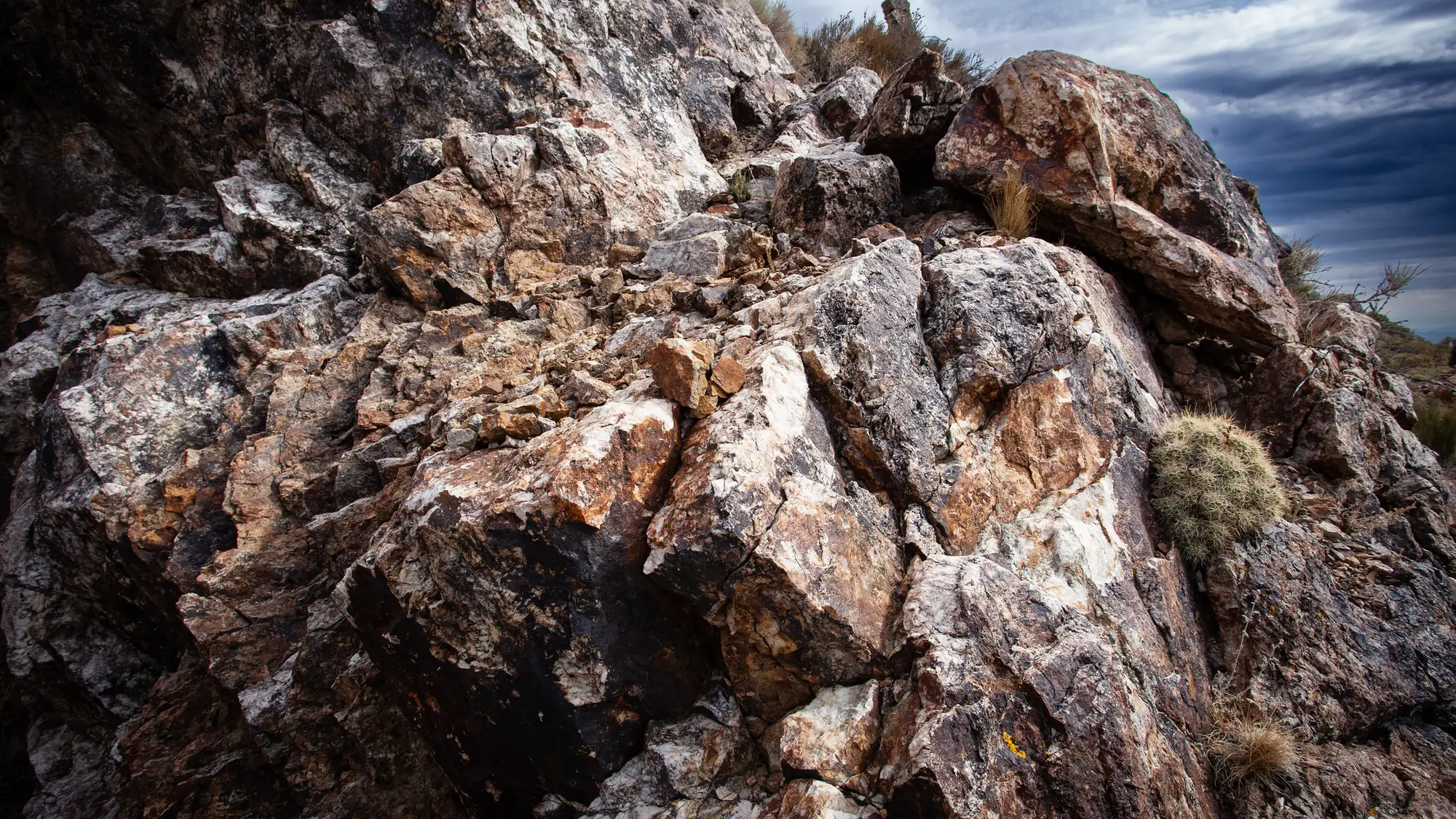
Quartz-veined outcrop
Ground that is not being worked
And the people who might work it
There is a specific kind of stranded asset in American mining: a claim or a mineral estate held by someone who is never going to develop it. A prospector who staked it thirty years ago. A ranch whose mineral rights were severed from the surface before the family bought the place. An estate that inherited a block of claims with the annual fees still being paid out of habit.
On the other side are operators, juniors and investors who spend real money looking for ground and rarely hear about any of it, because there is no orderly place to look. This page is that place. It is free, and it connects the two directly — we take no commission, no finder's fee, and no position in anything listed.
If you hold ground
List it
Claims, leases, severed mineral estate, patented ground, or a prospect on deeded land. Tell us what you have and what you want done with it — lease, joint venture, royalty, or sale.
If you develop ground
Watch it
Every listing states its commodity, its county, its acreage and its status, and carries the BLM serial numbers where there are any, so you can pull the record yourself before you pick up the phone.
What this is not
Not a brokerage
We are not a broker, a dealer, an agent or an advisor. We do not value ground, we do not introduce for a fee, and we do not hold escrow. Everything past the introduction is between you and the other party.
What an unpatented claim actually is
The part most listings leave out
Under the General Mining Law of 1872, all valuable mineral deposits on open federal land are “free and open to exploration and purchase” by US citizens. Staking a claim there gives you a possessory right to the minerals. It is not title to the land, and the distinction is where most of the trouble on both sides of a claim sale comes from.
What a claim holder has
- The exclusive right to explore for and extract the locatable minerals inside the claim boundaries
- The right to follow a vein downward, between vertical planes drawn through the end lines of the location
- Possession of the surface inside those lines for mining purposes
- A right that can be sold, leased, inherited or optioned like other property
What a claim holder does not have
- Fee title. The land stays federal. BLM states it plainly: rights “are restricted to the development and extraction of a mineral deposit.”
- Exclusive surface control. The government keeps the right to manage the surface, including for public recreation, where that does not materially interfere with an ongoing mining operation.
- A clean exit. Reclamation liability for surface disturbance survives even if the claim is later declared abandoned and void.
- Any guarantee of mineral value. Recording a claim is a filing. It tests nothing about what is in the ground.
Sources: 30 U.S.C. § 22 · § 26 · BLM, Mining Claims and Sites on Federal Lands · 43 CFR 3830
The four kinds, and how big each can be
| Location | Statutory limit | What it is for |
|---|---|---|
| Lode | 1,500 ft along the vein, 600 ft wide | A vein or lode in place. No location may be made until a discovery has actually been made inside the claim — the statute is explicit about this. |
| Placer | 20 acres per individual claimant | Deposits not in a vein. Associations may locate more — two locators 40 acres, three 60, up to 160 acres for eight or more. A corporation is limited to 20 acres per claim. |
| Mill site | 5 acres | Nonmineral land for mining or milling purposes — a plant, a shop, a tailings area. |
| Tunnel site | 3,000 ft from the face | Blind veins not previously known to exist, along the line of a tunnel. Stopping work for six months is treated as abandonment of the right to undiscovered veins. |
Sources: 30 U.S.C. § 23 · § 35 · § 42 · § 27 · BLM
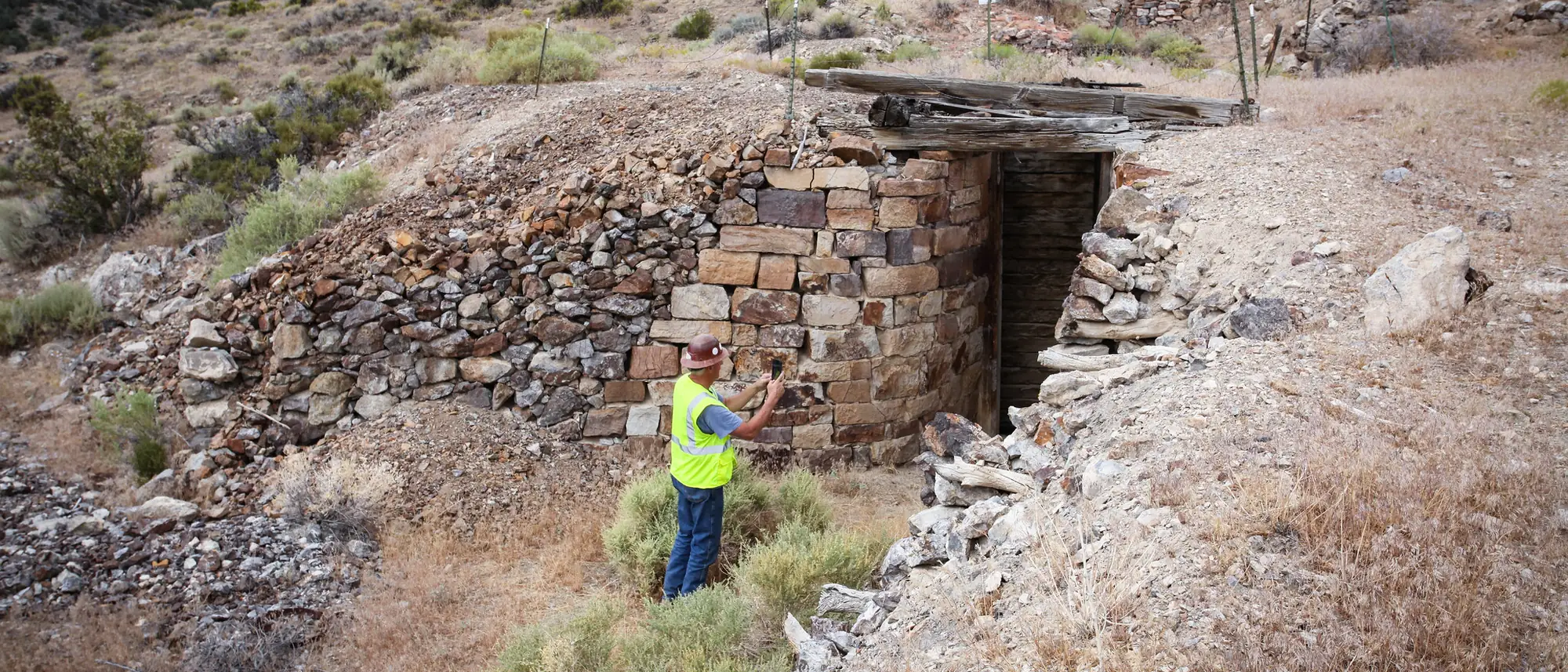
A claim is a right to the minerals. It is not the land.
What a buyer is actually buying
What it costs to keep a claim alive
One date matters more than all the rest
A claim is maintained by paying an annual fee, or by qualifying for a waiver and doing the work instead. Miss the deadline and the claim is forfeited by operation of law — not by a decision, not after a letter, not after a hearing. BLM says it in those words. A claim can be legally dead on 2 September with nobody having been told, which is precisely why a buyer verifies the current assessment year rather than the seller's paperwork.
Every year, without fail
The annual maintenance fee, or the small miner waiver, must be filed with the proper BLM state office on or before this date. The assessment year runs 1 September to 31 August.
Annual maintenance fee per lode claim, mill site or tunnel site. For a placer claim, $200 for each 20 acres or part of 20 acres.
Total to file a new lode, mill or tunnel site claim — $25 processing, $49 location, $200 initial maintenance — due within 90 days of locating it.
The small miner waiver ceiling. You and all related parties together must hold no more than ten non-closed claims nationwide. Form 3830-002, by 1 September, and $100 of labour or improvements per claim.
The annual FLPMA filing — affidavit of assessment work or notice of intent to hold, $15 per claim. A separate deadline from the fee, and missing it forfeits the claim too.
Federal and county. The location notice must be recorded with the county or borough as well as with BLM, and a transfer must be filed in both places.
The trap that catches new claimants
Locate a claim before 1 September but file it with BLM on or after that date, and you owe the maintenance fee for both assessment years unless a valid waiver went in with the location. Processing, location and initial maintenance fees must all be paid in full at the time of filing.
Fee figures as published by BLM and read on 28 September 2026; the page is labelled effective 1 September 2024. Service fees are adjusted periodically, so check the current figures before relying on them: BLM, Mining Claim Fees · BLM, Annual Maintenance · 43 CFR 3830 · 43 CFR 3835 · 43 CFR 3836
What we check before a listing goes up
And what we cannot check for you
Every listing on this page is checked against the federal record first. That is slower than publishing whatever arrives, and it is the whole point: a directory that will print anything is worth nothing to the people it is meant to serve.
We verify
- The claim exists. Every serial number given is looked up in BLM's Mineral & Land Records System.
- The case is live. Not forfeited, not abandoned and void, not null and void from the beginning.
- The lister is the record holder, or can show the deed and the filing that makes them one.
- The description is consistent — that the acreage claimed is possible for the location type, and the county matches the legal description.
- Nothing is offered that we will not carry (below).
We cannot verify, and neither can the register
- That there is a deposit. A lode location is invalid without a discovery, but nothing in the recording process tests for one. A claim can be perfectly current and mineralogically worthless.
- Chain of title. County records and BLM records are separate, and a transfer that was never filed leaves BLM recognising the previous owner.
- Boundaries on the ground. Monuments move, wash away and were sometimes never set where the paperwork says.
- Surface access, where the mineral and surface estates are severed or the ground is reached across someone else's.
- Existing liability from previous disturbance.
Do this yourself, before money moves
Pull the record. BLM's Mineral & Land Records System is public at mlrs.blm.gov, with public reports at reports.blm.gov. You can look a claim up by serial number, by claim name and number, and geographically by land description. Some fields are redacted in the public versions; an unredacted report needs a Login.gov account. Then get a title opinion, and get a qualified person onto the ground. Our check is a floor, not a substitute for either.
What we will not list
Five things, and the reason for each
Fractional undivided interests
The Securities Act defines a security to include a “fractional undivided interest in oil, gas, or other mineral rights.” Carving ground into fractional interests and offering them is a securities offering, whatever it is called. That needs registration or a valid exemption and a securities lawyer — not a listing page.
Claims sold as investments
We will list ground offered to someone who intends to explore or mine it. We will not carry a claim marketed on the strength of an expected return, a grade estimate with no qualified person behind it, or a comparison to a producing mine nearby.
Anything pitched as patentable
BLM has been prohibited from accepting new mineral patent applications since 1 October 1994, and its current guidance says it will not accept any. A listing that offers a route to fee title through patent is describing something that cannot presently be applied for.
Ground on withdrawn land
A claim located on land after a withdrawal takes effect is null and void from the beginning — no rights were ever obtained, and there is nothing to cure. Disturbing resources there is trespass.
Listings we cannot tie to a person
A name, a working phone number and an email that answers. Knowingly filing false information with BLM carries criminal exposure under 18 U.S.C. § 1001 and 43 U.S.C. § 1212 — up to five years and a $250,000 fine — and we will say so to anyone who asks about a listing.
Not every state works this way
Where the 1872 law does not reach
Mining claims can only be located in nineteen states: Alaska, Arizona, Arkansas, California, Colorado, Florida, Idaho, Louisiana, Mississippi, Montana, Nebraska, Nevada, New Mexico, North Dakota, Oregon, South Dakota, Utah, Washington and Wyoming. Everywhere else, mineral ground changes hands some other way, and a listing that calls itself a federal claim outside those nineteen is wrong on its face.
Texas
No federal claims at all. Hard minerals on state land are acquired by prospect permit and lease from the Texas General Land Office under Natural Resources Code chapter 53. A Texas listing is private mineral estate, a GLO permit or lease, or it is not real.
State trust land
Leased, never located. Utah's trust lands agency administers about 7.8 million acres, of which 1.4 million are mineral estate only — a useful reminder that surface and minerals are routinely severed even in state hands. Minerals go out by auction, usually three times a year, or by negotiated agreement.
Alaska, twice over
Alaska has both. Federal claims on federal land, and a separate state claim system on state land recorded through the Department of Natural Resources and managed at akmining.info. An Alaska listing has to say which one it is, so it can be checked in the right register.
Federal minerals, private surface
On Stock Raising Homestead Act land the United States owns the minerals and somebody else owns the surface. Locating there means filing a Notice of Intent to Locate with BLM, serving the surface owner by certified mail, and waiting thirty days before entry. A buyer inherits all of it.
List your ground
Free · checked by a person · no commission
Fill this in and it builds a plain-text listing request for you to email. Nothing is transmitted from your browser. We check the record before anything is published, and we come back to you either way.
Email this to us
Send it to . Paste the block below into the message. Attach maps, assays or a technical report if you have them.
No listings yet
This page opened on 28 September 2026 and nothing has been checked and published yet. When listings go up they will appear here, each with its serial numbers and the date its record was pulled. An empty page is more honest than a seeded one.
What this page does not claim
This is not legal advice, and it is not a substitute for a title opinion. Everything above is cited to the statute, the regulation or BLM's own published guidance, and every figure was read on 28 September 2026. Fees change, land status changes, and the register is updated daily. Check it yourself.
We do not value ground and we do not endorse it. Verifying that a claim exists and is live says nothing whatever about whether there is anything in it. Those are different questions and we only answer the first one.
We take no commission. If that ever changes, it will be stated on this page before it applies to anyone.
Some of what we could not confirm is deliberately absent. The appropriations vehicle currently carrying the patent moratorium, the exact fields a public records report returns, and the current-year figures for the smaller service fees could not be verified in the research behind this page, so no number is asserted for any of them. Where a figure is given, its source and the date it was read are given with it.
Where to next
92 mines that stopped
Closed, idled and reclaimed operations across 41 states — what was there, what it produced, and why it stopped.
FundingMoney for the ground
There is no federal grant to open a mine, but there is real money for processing and equipment, and a loan guarantee that covers mining outright.
Free listingServices, not ground
Drillers, assayers, geologists and contractors are listed free on a separate page.